
How Bench Warrants Work in Canadian County
A bench warrant is the judge acting inside a case already open. In Canadian County, a missed arraignment, hearing, trial, or continuance can trigger a bench warrant plus bond forfeiture. The order stays tied to that docket. That separates it from a probable-cause arrest warrant on a new complaint. Check OSCN first. Then call the Canadian County Court Clerk at 405-295-6100 and ask whether the docket shows a warrant, a recall, a bond forfeiture, or a new date set. A municipal case belongs at the city court instead. For service or custody, the sheriff sits at 405-262-3434, though only the judge recalls the order.
- Locate the case and the missed appearance in OSCN.
- Call the Court Clerk or city clerk for the current status.
- Ask which judge has recall authority and whether counsel must file.
- Confirm bond, appearance, payment, or surrender instructions.
- Keep the signed order or receipt and recheck the docket.
The Continuance Form's Bench Warrant Checkbox
The county's own continuance paperwork shows how a missed date turns into a warrant here. Canadian County's form checks "Defendant fails to appear" and then "Bench Warrant and Bond Forfeiture ordered." That exact wording is a useful clue when you read a docket or a paper order. It promises no fixed bond amount. Nor does every case follow one timing rule. The assigned judge, the bond order, and any later recall control what actually happens. Read the local Canadian County rules next to the case file, and ask the clerk which document is current.
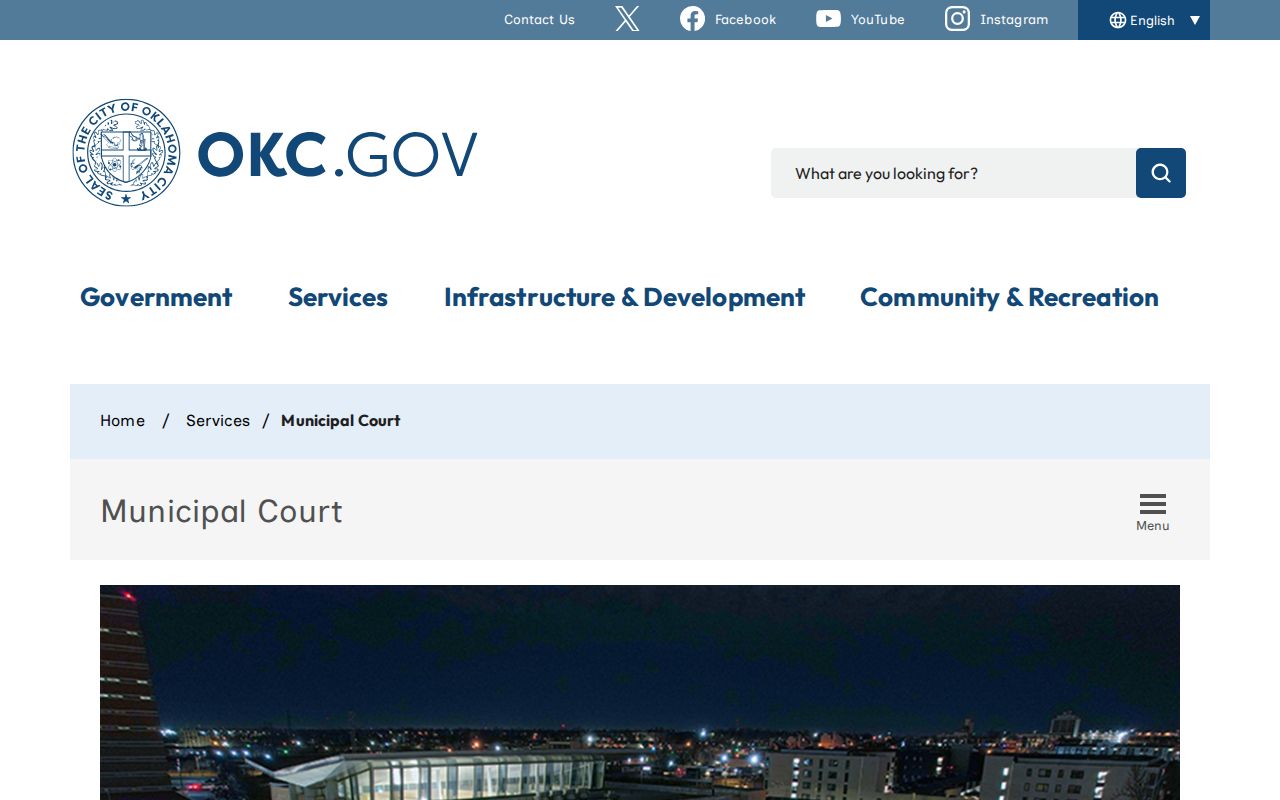
The court and sheriff perform different jobs after a bench warrant is ordered.
Bench Warrant Issuance in Canadian County
Under 22 O.S. § 454, a person out on bail who fails to appear can draw a clerk-issued bench warrant and bail forfeiture. The court can also act on a broken court order, a probation term, a missed payment, or contempt. The reason lives in the case record, so the word "bench" alone tells you little. Municipal courts run their own procedures. Yukon leans on FTA and failure-to-pay language. El Reno warns that missing a payment date without an arrangement can bring an FTA warrant. Piedmont warns of a warrant plus a DPS request after a failure to appear. None of these city rules fold into one Canadian County rule.
Canadian County Bench Warrants and Assigned Judges
Local Rule 23 splits recall authority by case status. With a filed, assigned case, the assigned District or Associate District Judge handles the recall. No case filed yet means the issuing judge acts, or the Chief Judge steps in when that judge is unavailable. The Court Clerk records the order but cannot cancel a judge's warrant alone. There is no published universal recall form, filing fee, or hearing lead time, and no automatic protection from arrest. Ask the clerk whether your attorney must file a motion, whether you must appear personally, and how the signed order reaches the sheriff. A recall or quash ends the warrant. It does not dismiss the underlying charge by itself.
How Bench and Arrest Warrants Differ
Both can lead to custody, but they start at different points in the case.
| Question | Bench warrant | Arrest warrant |
|---|---|---|
| Typical trigger | Missed required appearance or court condition. | Complaint, information, or affidavit with probable-cause review. |
| Case stage | Usually an existing case or release order. | Often the initial arrest step in a criminal case. |
| Record route | OSCN events, Court Clerk, assigned judge. | Criminal Division judge, clerk filing, serving agency. |
| Clearing question | Recall, new date, bond, appearance, or surrender. | Current bond, initial appearance, recall, or counsel route. |
The terms are not interchangeable. Tell the clerk the exact label on the paperwork.
Canadian County City FTA Bench Warrant
A city citation can produce an FTA or arrest warrant that behaves much like a bench warrant, because it too follows a missed court date. Yukon, El Reno, Mustang, Piedmont, and Oklahoma City each keep municipal records for their own traffic and ordinance matters. The Canadian County Sheriff's Most Wanted page may leave those entries out. OSCN may not show a full municipal docket either. So use the city named on the citation. Yukon points people to its clerk or police. El Reno runs a portal and a clerk at 405-262-4070. Mustang's Court Clerk sits at 405-376-4521, Piedmont's court at 405-373-5216. Oklahoma City keeps a warrant office at 405-297-3946. Confirm before anyone heads to a county jail.
Canadian County Courts That Issue Bench Warrants
District Court's criminal division, with its assigned District and Associate District Judges, handles state criminal cases. Special Judges take authorized preliminary or misdemeanor matters. Municipal judges cover city traffic and ordinance cases. The Juvenile Division works through a confidential process at the Children's Justice Center, and any federal matter belongs to a federal magistrate or judge.
District Court and Court Clerk
301 N Choctaw, El Reno, Oklahoma 73036
405-295-6100
Canadian County Sheriff's Office
208 W Rogers, El Reno, Oklahoma 73036
405-262-3434
Whatever bench warrant you face in Canadian County, work through the court that issued the order, since the sheriff serves it but never replaces that judge.
Canadian County Bench Warrant Access Limits
OSCN is a public access layer, not the court's case-management system. Older cases, documents marked available only at the clerk, recently changed entries, sealed records, and juvenile matters may all stay hidden. Title 10A protects juvenile court records. When a document is protected or missing, ask the Canadian County clerk for an explanation rather than guessing.
Access rule: Ask for the current public copy and the specific reason a document is unavailable. The absence of a docket image does not show that a warrant was never issued.
For Canadian County access questions, the OCCA Rule 2.6 guidance and the Oklahoma Open Records Act set out access and confidentiality together.
Clearing a Bench Warrant in Canadian County
Ask the court first for the current lawful route out. That may mean a recall motion, a scheduled appearance, a new date, a payment plan, bond, or a planned surrender. A lawyer can reach the assigned judge, review any bond forfeiture, and arrange the safest process. Canadian County publishes no walk-through window.
- Get the case number and docket event.
- Ask the Court Clerk which judge is assigned and what filing or appearance is required.
- Confirm whether bond, court costs, or a separate forfeiture remains.
- If surrender is required, call the sheriff or detention center for the location and intake procedure.
- Obtain a signed recall, release, order, or receipt, then ask when OSCN and the sheriff will update.
Do not guess the route: A person who walks into the wrong office may not address the order. Confirm the court and instructions before appearing.
No County Walk-In Window Is Published
The sheriff's office sits at 208 W Rogers, and the detention center is at 304 N Evans, yet Canadian County publishes no walk-through schedule and no safe-surrender appointment system. So call first. Ask who actually receives someone with an active warrant, whether it is city court staff, the jail, the sheriff, or a judge's office, what identification to bring, and whether a magistrate or judge will set or review bond on the spot. Yukon shows how one city handles it. Its FAQ lets a person pay at the clerk or surrender to Yukon Police, with a judge then reviewing matters at the jail. That route belongs to Yukon's municipal court only, not to a District Court case. In Canadian County, surrender procedure depends on the case, so confirm the details by phone.
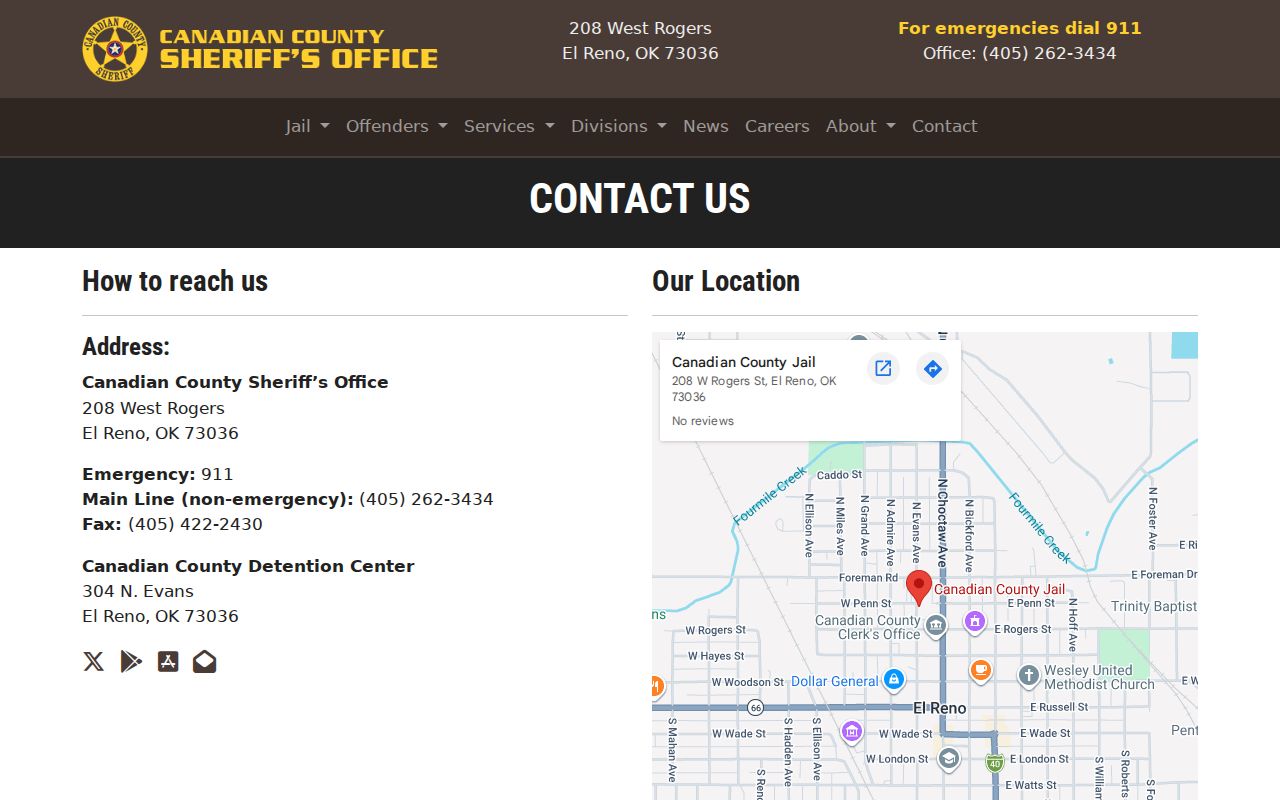
The verified Canadian County office address helps you route a question, but call before any surrender.